Lower labor costs and the resulting realization of profits have been key components in the expansion of the global market. As we continue to witness the prolific liberalization of this market, it is important that we remember the human factor. China’s newly implemented Labor Contract Law attempts to address the human factor, i.e., the rights of workers. The general purposes of the new labor law are three-fold. The new implementations have been designed to: (1) improve upon the employment contract procedures; (2) develop consensual and harmonious contractual relationships; and (3) protect the rights and interests of employees.[1]
Workers are essential to continued and sustained global market growth. Similarly, the absence of workers’ rights and the reduction of labor costs fuel market growth. As a result, multi-national companies and the workers they employ have encountered a seeming paradox of workplace realities. On the one hand, multi-national companies need to compete for market share and realize profits. For the same reason, workers need rights to ensure economic security and the existence of basic workplace justice. Generally, workers’ rights result in an increase in labor costs. Thus, employers typically opposed to substantial rights for workers in the workplace. Can laws in China be developed to address this paradox? What role does the rule of law play with regard to this issue? Is it imprudent to attempt to balance the interests of multi-national companies and workers? What are the roles of government and legal systems in addressing these issues? Does economic stability demand a resolution to this dilemma? This essay will address these questions and suggest solutions.
I. Overview of the Rule of Law
In its most basic form, the rule of law is the principle that no one is above the law. A crucial application of the rule of law is the principle that governmental authority is legitimately exercised only in accordance with written, publicly disclosed laws adopted and enforced by procedural steps referred to as due process. Typically, the foundation of these laws is supported by a Constitution. Pursuant to the rule of law both citizens and governmental leaders are accountable under the law. Under this concept, legal systems operate to uphold the law and ensure impartial accountability. The rule of law is not necessarily a democratic phenomenon. Some models of the rule of law place emphasis on how the legal system upholds the law and not necessarily the fairness of the law. Thus, it can be argued that dictatorships and undemocratic nations can operate under a rule of law.
II. United States’ Application of the Rule of Law
In the U.S., the rule of law evolved over time. The rule of law as we currently understand it came into existence after a prolonged process of political unrest, violence, revolutions, and a civil war. The U.S. Constitution formulates the foundation of the rule of law. In the American tradition, the rule of law embodies the notion of the supremacy of the law. There are four main principles that form the basis of the rule of law: (1) the supremacy of regular law over arbitrary power; (2) equality under the law for all classes of citizens; (3) the law of the constitution forms the foundation of the rights of individuals and (4) the active role of the courts in administering the ordinary law, defining the rights of individuals and enforcing the laws. In its normative sense, the rule of law has come to be associated with other concepts such as presumption of innocence, double jeopardy, habeas corpus, legal equality separation of powers between the executive legislative and judicial branches of government and court interpretation of the law.
In theory, the concept of the rule of law is sound, but in application, flaws can exist. For example, for approximately 200 years the U.S. government upheld laws that permitted and condoned the practice of slavery. These laws were unjust, denied basic human rights, encouraged ongoing systems of racial segregation, and caused economic disenfranchisement.
Opposition to the slavery laws increased and led to social unrest and eventually a four-year Civil War (1861-1865).[2] The U.S. implemented a number of laws to address the issues presented in a post-slavery nation.[3] On January 31, 1865, the U.S. Congress approved the Thirteenth (13th) Amendment to the U.S. Constitution, abolishing slavery. [4] Other laws were implemented such as the Civil Rights Acts of 1966 and 1875, Jim Crow Laws[5] , Title VII of the Civil Rights Act of 1964[6], and the National Voting Rights Act of 1965[7]. Other laws were also implemented.[8] A casual study of U.S. history with regard to the struggles with racial equality might lead one to assume that during this turbulent era the rule of law was used to mask inequality and racial exploitation. As a result of this turbulent era, the rule of law has continued to evolve so as to better emulate the Constitution that guarantees equal rights for all U.S. citizens. Post-Civil War America continues this evolution process to ensure the notion of supremacy of the laws.
III. China’s Application of the Rule of Law
As an emergent country, China may also evolve in relation to the implementation and use of the rule of law. In China, discussions centered upon the conceptual notions of the rule of law conclude that laws exist to enhance the power of the state and nation. Thus, the Chinese government is said to adopt the concept of rule by law rather than rule of law. As China continues to develop and move from an isolated socialistic economy to an open market economy, the concept of rule of law will best complement global market goals.
As evidenced by the U.S. experience with regard to post-slavery issues, there is a direct correlation between operation of the rule of law and the realization of basic human rights. If the current movement towards an open society in China can allow for the embracing of the rule of law rather than rule by law, the result will be the implementation of laws to ensure human rights, which will naturally lead to employee rights in the workplace. Currently the Peoples Republic of China (PRC) grapples with the dilemma presented by the need to ensure job growth for tens of millions of individuals unemployed as a result of being laid-off from state-owned enterprises.[9] Estimates suggest that from 100 million to 150 million surplus rural workers have migrated from the rural areas to the cities in search of permanent employment.[10] If employment issues are largely unaddressed or employment laws ineffective, human nature dictates that social unrest may follow, which could result in significant negative implications for the Chinese economy. The result could result in far reaching implications for the global economy. Thus, the newly implemented Labor Contract Law begins to address this dilemma and is a wise course of action. The new law provides for increased employee rights. Some of the important segments of the law allow for shortened probationary periods, makes fixed-term contracts less attractive, and increases involvement of labor unions.
This new labor contract law is important because it signals to the citizenry of China that the government is aware of the plight of the disenfranchised and will work to resolve workplace issues that tend to worsen the situation. The new law also signals to multi-national companies that the Chinese government is serious about ensuring against exploitation of its working citizenry. In order to balance the interest between the workers’ rights and employers’ fears of increased labor costs, the Chinese government should be intentional about ensuring the laws will be equally applied to both domestic and multi-national companies. The government must also ensure that the workers are educated about the law and have full confidence in the procedures designed to allow access to the benefits derived from the law. Thus, proper mechanisms must be in place to ensure that the law is followed and applied consistently.
The right to work in China is both a fundamental human right and a constitutional right. In fact, according to the constitution, citizens of the PRC not only have a right to employment, they also have a duty to work. The interplay between the right to employment and duty to work has a significant impact on China’s economic growth.[11] Thus, it is imperative to ensure that the new labor contract law is not only implemented, but also followed and enforced. One of the most pressing challenges for the Chinese government is to develop a system that complements the enacted laws and facilitates oversight and accountability in the upholding of the laws.[12] Perhaps the implementation of this new labor contract law presents an opportunity to formulate a process that utilizes the concepts of the rule of law along with complementary mechanisms allowing for judicial interpretation of the law.[13] China has established mechanisms for the operation of a judicial system.[14]
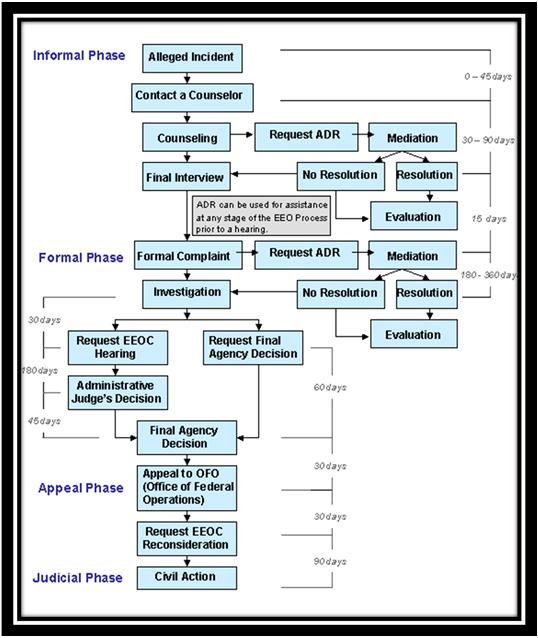
A potential model to consider is the U.S. model for ensuring that the laws prohibiting federal sector workplace discrimination are followed.[15] Under this model, laws have been established prohibiting certain instances of work place discrimination.[16] Pursuant to these laws, the Equal Employment Opportunity Commission (EEOC), an administrative agency, was created to conduct investigations and hearings with regard to allegations of federal workplace discrimination.[17] Cases are initially heard by an administrative judge and if not resolved, proceed to federal district court.[18] Parties have the right to proceed to the Circuit Court of Appeals and finally to the U.S. Supreme Court.[19] The ruling by the U.S. Supreme Court constitutes a final disposition of the case.[20] Pursuant to this scheme, there is a developing body of U.S. case law that has interpreted the laws prohibiting workplace discrimination. This body of case law serves as precedent to be followed in other cases.[21]
A similar scheme could be used in implementing the new labor contract law. However, the U.S. model need not be strictly followed. As an emergent country, China has the benefit of researching a number of models and determining which model best complements its evolving global development. For example, the U.S. process requires lengthy inter-agency procedures that are duplicative in nature and unreasonably time consuming.[22] Thus, the model adopted by the Chinese government could eliminate the time consuming aspects of the procedures and by so doing eliminate more than 100 days from the process. There are other U.S. models for implementing mechanisms involving labor law issues. What is of utmost importance is the identification of processes that will complement the laws so as to provide the intended benefit to the citizenry and continue to support China’s economic growth and development.[23]
V. Conclusion
The continued growth and economic stability of China and the global market is predicated upon a number of factors. One of the most important factors is the implementation of laws designed to complement economic expansion. Adopting the concepts of a reliable rule of law is crucial. If China elects to promulgate the rule of law, it will also have to design and operate a legal system independent of the government, with authority to interpret the laws enacted by the government. By so doing, the government will effectively engender the trust and confidence of the citizenry. Additionally, China must assure the citizenry that the government’s paramount interest is to ensure that laws are adopted that guard against exploitation of workers – both migrant and city workers. Further, China must continue the dialogue with multi-national companies and offer assurances that all laws will be applied equally to domestic and foreign companies doing business in China.
China is in the enviable position of unprecedented economic development and has available models from developed countries in which to glean examples. Careful research and planning will result in continued progress and market expansion.
--------------------------------------------------------------------------------
[1] See Law of the People’s Republic of China on Employment Contracts, Chapter 1, Article 1(2008).
[2] For a thorough treatment of the history of the American Civil War, see James M. McPherson, Battle Cry of Freedom: The Civil War Era (1988).
[3] However, U.S. Supreme Court case law interpreted these laws in such a way as to limit the rights of freed slaves. See e.g., Plessy v. Ferguson, 163 U.S. 537, 545 (holding that laws requiring the separation of blacks and whites in the use of public facilities, do not violate the 14th Amendment of the U.S. Constitution, so long as the facilities are equal).
[4] The states ratified the 13th Amendment on December 18, 1865.
[5] U.S. laws that enforced racial segregation in the Southern States from 1877 to the 1954. See generally, Internet Modern History Sourcebook U.S. Civil War available at http://www.fordham.edu/hallsall/mod/modsbook27.html (last visited December 30, 2007).
[6] 42 U.S.C. §2000e, et seq. This Act prohibits employment discrimination based on race, color, sex, national origin, and/or religion.
[7] 42 U.S.C. §1973-1973ee-6.
[8] See e.g., Equal Pay Act of 1963, Age Discrimination in Employment Act of 1967, Rehabilitation Act of 1973, Titles I and V of the American with Disabilities Act of 1990, and the Civil Rights Act of 1991.
[9] See CIA-The World Factbook, Economy Note on China, available at http://www.cia.gov/publications/factbook/index.html (last visited December 30, 2007).
[10] Id.
[11] See Huang Lie, Chinese Citizen’s to Work, in Constitutionalism and China 484( Li Buyun ed., 2006).
[12] Victor Mallet, The Centre and the Provinces: An Enduring Dysfunctional Relationship, Financial Times, Oct. 16, 2007, available at http://www.ft.com/cms/s/2/9fbd4698-7561-11dc-b7cb-0000779fd2ac,dwp_uuid=07c92c3a-757f-11dc-b7cb-0000779fd2ac.html (stating that “. . . [T]he most important issue in Chinese politics and government today, as it has been for centuries, is arguably not the latest political maneuvering in Beijing but the enduringly dysfunctional relationship between the central government and the provinces. While the outside world imagines an authoritarian Communist party firmly imposing its will on the whole of China and its 1.3 billion inhabitants, the reality is that national policies and directives announced with great fanfare in Beijing are frequently ignored by party leaders at the provincial and city levels, even though these local leaders may themselves aspire to national office. The old Chinese saying about the limited writ of the central government – shan gao, huang di yuan (“the mountains are high, and the emperor is far away”) – is as relevant today as it ever was”.).
[13] See generally Eu Jin Chua, The Laws of the People’s Republic of China: An Introduction of International Investors, 7 Chi. J. Int’l L. 133-138(2006).
[14] See Huang Lie, Rule of Law in China: Ideal and Reality, in Constitutionalism and China 184-85( Li Buyun ed., 2006) (explaining that it is imperative for the Chinese government to establish a system of impartial administration of justice where the courts make determinations based upon the facts of the case).
[15] Appendix A.
[16] Title VII of the Civil Rights Act, supra note 6.
[17] Regulations can be found at 29 C.F.R. §1600, et seq. Regulations specifically governing federal sector workplace discrimination can be found at 29 C.F.R. §1614.
[18] Id. at §1614.310.
[19] Id.
[20] Id.
[21] See e.g. McDonnell Douglas v. Green, 411 U.S. 792, 802 (1973)(setting forth the requirements for establishing a prima facie case of discrimination based upon race).
[22] See Appendix A, supra note 15.
[23] Melissa S. Hung, Obstacles to Self-Actualization in Chinese Legal Practice, 48 Santa Clara L. Rev. 213, 227-241 (2008).
APPENDIX A